
Blog · Guide · By Lenam Vela Ligera ·
Sailing dinghy: polyethylene or fibreglass?
Construction, toughness, maintenance and which to choose, from people who work with both materials.
In short: For sailing schools, clubs and families, a polyethylene boat such as the Trilam-built Toppers is the best choice: it withstands knocks and launching and needs almost no maintenance. To race in classes such as the 420, fibreglass is required by the rules and gives the stiffness racing needs.
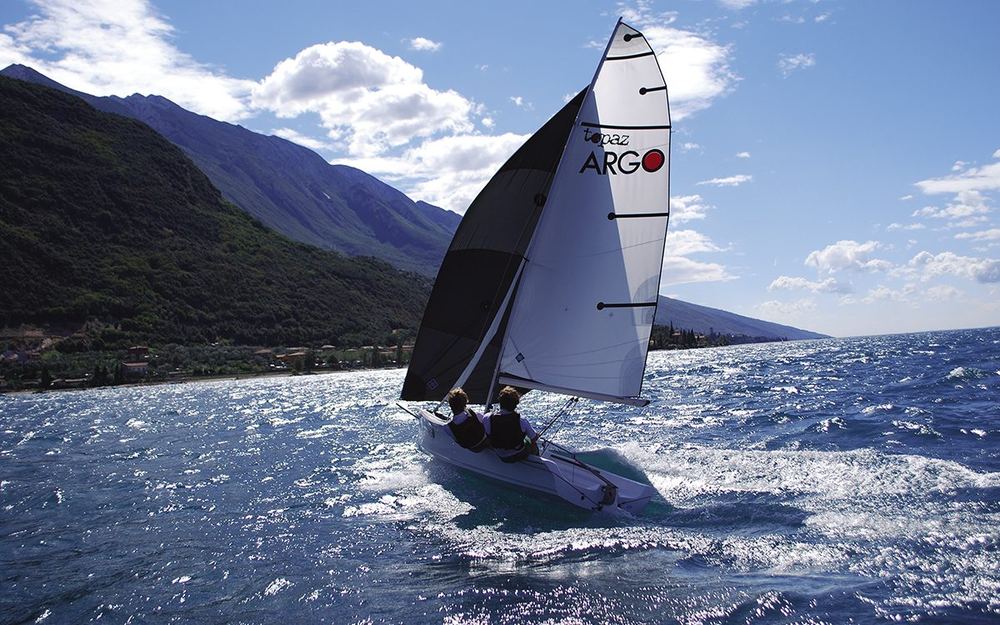
It is one of the first questions people ask when buying a sailing dinghy, whether for a school, for family sailing or to start racing. At Lenam we know it well because we work with both materials: we build the Optimist and the 420 in fibreglass and we sell Topper polyethylene dinghies in Spain and Portugal. Neither material is better than the other: each one suits a different use.
How is each one built?
Fibreglass (polyester and glass fibre). The hull is laid up by hand in a mould, layer by layer, with gelcoat, resin and glass fibre. It is a craft process where materials and care make all the difference. In our 420, for example, we use NPG isophthalic gelcoat, isophthalic polyester resin and powder-bound mat, which prevents osmosis problems, and we reinforce the hull and deck with omega stiffeners placed with our own system.
Polyethylene (Topper). The hull is moulded by machine in polyethylene. Topper was the first builder to use Trilam: a three-layer construction (polyethylene, foam and polyethylene) that makes the whole boat very strong without adding weight. It is used across the whole Topper range, from the Taz to the Omega and the Topaz catamarans.
What are the day-to-day differences?
| Polyethylene (Topper Trilam) | Fibreglass (Lenam Optimist and 420) | |
|---|---|---|
| Knocks and launching | Very tough: stands up to daily use by schools and families | Tough, but needs more care when launching and transporting |
| Maintenance | Practically none | Checking and caring for the gelcoat |
| Stiffness and performance | Great handling for learning and having fun | The stiffness class racing looks for |
| Racing classes | Topper, and club racing with the whole range | Required in classes such as the 420 |
| Best for | Sailing schools, clubs and families | Racers and racing teams |
Can't decide between two models? Tell us what you need it for and we'll recommend the right boat.
Which one for your use?
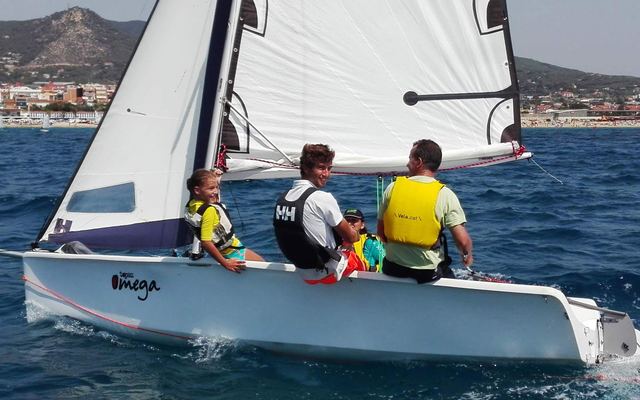
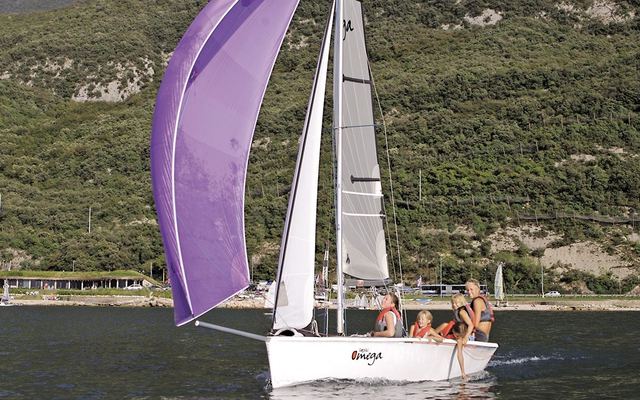
For a sailing school or a club: polyethylene. The boats go through many hands, are launched every day and must last for years with minimal maintenance. Boats such as the Omega or the Argo are designed for exactly that.
For family sailing: polyethylene too. They are stable and roomy and, in the lighter models such as the Topper, the Taz or the Topaz, they can be carried on a car roof.
For racing in a class such as the 420: fibreglass, because the rules require it. The 420 only allows polyester resin and bans sandwich construction, so the quality of the materials and the build makes the difference in how long the boat lasts and how competitive it stays.
Boats mentioned
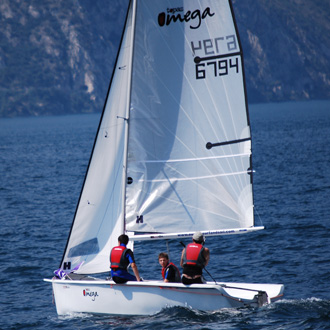 Omega4.70 m · 1-7 · 160 kg
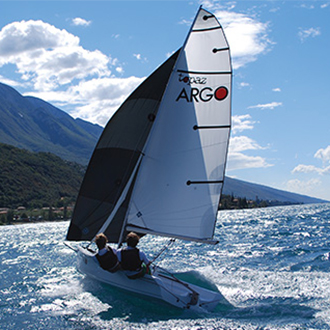 Argo4.40 m · 1-4 · 110 kg
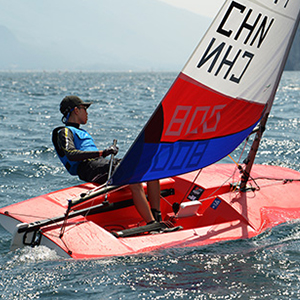 Topper3.40 m · 1-2 · 45 kg
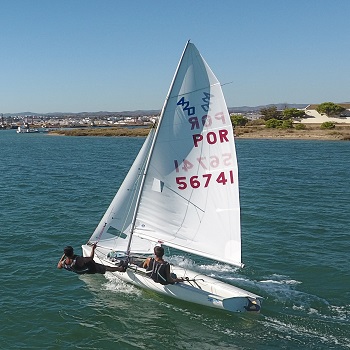 420Two-person racing dinghy
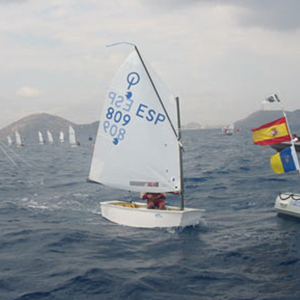 OptimistIODA rules · 35 kg
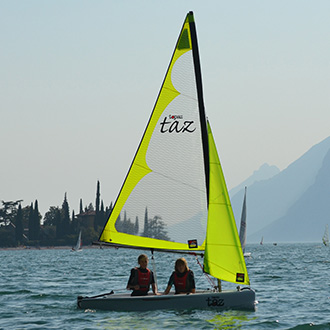 Taz2.95 m · 1-2 · 40 kg
If you're still not sure, ask us. We have been advising schools, clubs, families and racers since 1995, and we will tell you honestly which boat fits what you are looking for.
You may also like
Let's talk
Tell us which boat you're looking for or what you need, and we'll get back to you as soon as possible. No-obligation quotes.
info@lenam.net · Workshop in Llinars del Vallès (Barcelona, Spain) · Monday to Friday